Friday, 21 October 2011

The Gaze and the Media


‘according to usage and conventions which are at last being questioned but have by no means been overcome - men act and women appear. Men look at women. Women watch themselves being looked at’
                                                (Berger 1972) From the Ways of seeing chapter 3

Women watch themselves being looked at, not because they are vain but because of the many representations of women that surround us. Women survey their own femininity.
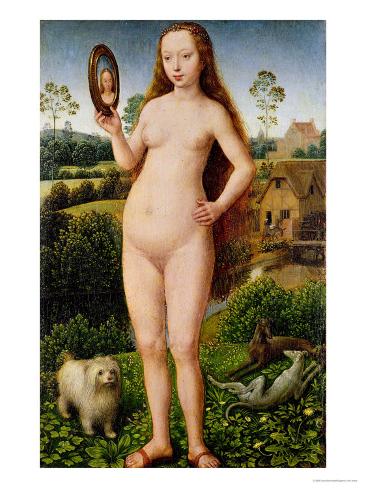

Hans Memling 'Vanity' (1485)

Mirror as device of justification, moral condemnation


Present day version, although now she is looking back at herself in the mirror.


MANET - Bar at the Folies Bergeres, 1882


MANET - Bar at the Folies Bergeres

Again, self-portrait…

Skewed perspective.

Dissaffected from society, unhappy at work and not involved with the revelry - Marginalised members of this great new Modernist society
Role of women - disaffected, no longer the passively available, sexualised Nymphs
Locket around the hints at another life - escapism - a love token from another world
She is the only figure not reflected - Paris as a hall of mirrors - Superficiality


Jeff Wall 'Picture for Women'


  • inspired by Manet's masterpiece A Bar at the Folies-Bergères (1881–82). 
  • In Manet's painting, a barmaid gazes out of frame, observed by a shadowy male figure. The whole scene appears to be reflected in the mirror behind the bar, creating a complex web of viewpoints. 
  • The figures are similarly reflected in a mirror, and the woman has the absorbed gaze and posture of Manet's barmaid, while the man is the artist himself. 
  • Issues of the male gaze, particularly the power relationship between male artist and female model, and the viewer's role as onlooker
Coward, R. (1984) Peeping Tom   

Voyeurism: the compulsion to seek sexual gratification by secretively looking at sexual objects or acts; the actions of a Peeping Tom. 

Shift towards men also becoming objectified in pop culture.
Advert with men in their underwear.
Loads more adverts where men are the object now, compared to 50 years ago.


Mulvey notes that Freud had referred to (infantile) scopophilia - the pleasure involved in looking at other people’s bodies as (particularly, erotic) objects. 

In the cinema you can look without being seen my the actors, or the people around you.

Mulvey argues that various features of cinema viewing conditions facilitate for the viewer both the voyeuristic process of objectification of female characters and also the narcissistic process of identification with an ‘ideal ego’ seen on the screen. She declares that in patriarchal society ‘pleasure in looking has been split between active/male and passive/female’ (Mulvey 1992, 27). 

Artemisia Gentileschi ‘Judith Beheading Holofernes’ 1620, 
Two women are trying to cut off a man's head on a bed    


G,Pollock 1981

•Women ‘marginalised within the masculine discourses of art history’
•This marginalisation supports the ‘hegemony of men in cultural practice, in art’
•Women not only marginalised but supposed to be marginalised


Barbara Kruger
‘Your Gaze Hits The Side of My Face’
(1981)
Challenging the male gaze
from slide -
"The idea that women are natural liars has a long pedigree. The key document in this centuries-long tradition is the notorious witch-hunter's manual, the Malleus Maleficarum or The Hammer of Witches, which was commissioned by Pope Innocent VIII. The book was written by two Dominican monks and published in 1486. It unleashed a flood of irrational beliefs about women's "dual" nature. "A woman is beautiful to look upon, contaminating to the touch, and deadly to keep," the authors warned. They also claimed that "all witchcraft comes from carnal lust, which is in women insatiable".
It's not difficult to see these myths lurking behind Pacelli's description of Knox: "She was a diabolical, satantic, demonic she-devil. She was muddy on the outside and dirty on the inside. She has two souls, the clean one you see before you and the other." The lawyer's claim that she was motivated by "lust" could have come straight from the Malleus, which insists that women are more "carnal" than men"
Susan Sontag, On photography
•To photograph is to appropriate the thing photographed'
•The act of photographing is more than passive observing. Like sexual voyeurism, it is a way of at least tacitly, often explicitly, encouraging what is going on to keep on happening'

Reality TV
Appears to offer us the position as the all-seeing eye- the power of the gaze
Allows us a voyeuristic passive consumption of a type of reality
Editing means that there is no reality
Contestants are aware of their representation


Friday, 14 October 2011

Panopticism

INSTITUTIONS AND INSTITUTIONAL POWER


‘Literature, art and their respective producers do not exist independently of a complex institutional framework which authorises, enables, empowers and legitimises them. This framework must be incorporated into any analysis that pretends to provide a thorough understanding of cultural goods and practices.’  Randal Johnson in Walker & Chaplin (1999) (we as producers, we don't act in a vacuum, we don't just pluck ideas. The surrounding social context makes us think certain things)

The Panopticon design model. Jeramy Bentham 1971.

Michel Foucault (1926-1984)
- Madness and Civilisation - the rise of the concept of madness
- Disipline and Punish: The Birth of Prison - the ways society uses discipline throughout the ages to control us.

THE GREAT CONFINEMENT (late 1600s)

Madmen were part of society. The village idiot, the happy fool. As society starts to get more advanced there becomes a changing moral social attitude. To those who are deemed to be socially use less, or unproductive. 

'Houses of correction' to curb unemployment and idleness. Locked up and made to be productive for society with the threat of physical punishment. Anyone who was deemed not useful, even single mothers, lazy people etc.

This was a big mistake. Deviants and normal people who were accidentally put in their corrupted each other. Now clinically insane people had to be put in asylums that were separate to the prisons. In these asylums people were treated like children. They were given rewards to encourage good behaviour. 


Foucault says this is a shift in disciplinary techniques from the physical control to the subtle mental control. The asylum also means that madness is no longer visable.


The rise of new forms of knowledge, and knowledge specialists. The emergence of forms of knowledge – biology, psychiatry, medicine, etc. Legitimise the practices of hospitals, doctors, psychiatrists. Why is qualified to say what is right and what is wrong? Binary division.


Foucault aims to show how these forms of knowledge and rationalising institutions like the prison, the asylum, the hospital, the school, now affect human beings in such a way that they alter our consciousness and that they internalise our responsibility.

Older Forms of social control- institutional power, were less subtle, public humiliation. You are a lesson to all.


GUY FAWKES- is a great example.

This is the statement against him.

"That you be drawn on a hurdle to the place of execution where you shall be hanged by the neck and being alive cut down, your privy members (genitals) shall be cut off and your bowels taken out and burned before you, your head severed from your body and your body divided into four quarters to be disposed of at the King's please." The kings ultimate power over your body.

DISCIPLINARY SOCIETY and DISCIPLINARY POWER


Discipline is a ‘technology’ [aimed at] ‘how to keep someone under surveillance, how to control his conduct, his behavior, his aptitudes, how to improve his performance, multiply his capacities, how to put him where he is most useful: this is discipline in my sence’ (Foucault, 1981 in O’Farrell 2005:102)

The Panoptican- individual cells, backlight with guards, scruntinisers in the central viewing tower. Has a peculiar affect on those who are incarcerated. Central tower is in darkness, and often had venetian blinds so you couldn’t see in. So the prisoner is always being watched, and is aware that they are always being watched. This means that they never do anything wrong, so the guards didn’t actually need to be there. The prisoners incarcerated themselves, from the fear that someone could theoretically be watching them. The inmate would willingly submit to power.

‘Hence the major effect of the Panopticon: to induce in the inmate a state of conscious and permanent visibility that assures the automatic functioning of power.’ (Foucault, 1975)

Bentham wasn’t an evil man; he thought these buildings could also be used for hospitals, schools or laboratories. Disease wouldn’t spread and people wouldn’t gossip. A Panoptic asylum means you can draw conclusions and data without cross contamination.
This is the exact opposite of the dungeon where it is dark and people are forgotten.

Aims to be productive.
What Foucault is describing is a transformation in Western Society from a form of power imposed by a ‘ruler’ or ‘sovereign’ to… A NEW MODE OF POWER CALLED ‘PANOPTISICM’

Examples in modern society- the open plan office
-’The office’ great example of panoptisim because he’s being filmed. Put under surveillance, not acting in the way you would normally freely act.
-art galleries, how different people act in a gallery. No one tells you to act like that, it is the space automatically conditioning your behavior.
- Open plan bars. Apposed to old pubs with comfortable cubbyholes to sit in.
- Google maps!
- cctv
- Registers, personal info, panoptically make you attend lectures.
- TV

RELATIONSHIP BETWEEN POWER, KNOWEDGE AND THE BODY.

Disciplinary society’s produces what Foucault calls ‘docile bodies’. – Someone who is controllable, trainable, the docile bodies are better because it is more willing to be obedient. Train and watch themselves.

‘power relations have an immediate hold upon it [the body]; they invest it, mark it, train it, torture it, force it to carry out tasks, to perform ceremonies, to emit signs’ (Foucault 1975) – modern disciplinary societies.

DISCIPLINARY TECHNIQUES
“That the techniques of discipline and ‘gentle punishment’ have crossed the threshold form work to play shows how pervasive they have become within modern western societies” (Danaher, Schirato & Webb 2000)

The cult of health and the cult of the gym. We’ve been made to be health conscious by the government. Visible reminders of health. Why? The government wants a healthy and productive work force. Meaning less NHS bills and more work done! The fact that they are raising the retirement age because we are all now living longer, they are making us live longer to save them money. They’re not saying ‘well done on being healthy and have a long and easy retirement’.
We are becoming more productive citizens but not for ourselves. This is what the Nazi’s did.

The exercise of power relies on there being the capacity for power to be resisted.

For Foucault, ‘Where there is power there is resistance.’

-‘1984’- George Orwell (book) John Hurt, Richard Burton (dvd)

Vito Acconi ‘Following piece’ (1969)
-followed someone for a whole day. Stalking. Because we are living the illusion that we are independent and control ourselves. We think we make decisions, but we are the object of scrutiny.

Vito Acconi ‘Seedbed’ (1972)
- Made a platform in a gallery and masterbated under it while people walked over the top of him. At the same time his thoughts were projected through speakers so the public could hear him. I don’t like this much, he is weird!

Chris Burden ‘Samsung’ (1985)
- piece attached to the lever as people entered the gallery, forcing the walls apart.

GOODBYE FIRST YEAR

HELLO SECOND YEAR

Friday, 25 March 2011

Task 5 - How to read a photograph

Photography is used in many ways, for landscapes, portraits, documentary’s, and art. For every purpose that photography is used it is creating a new meaning, because when we view an image of photography we don’t actually view it as an image, we read it, as if it were text. In Clarke’s (1997) text “The photograph” he states that the “photograph both mirrors and creates a discourse with the world, and is never, a neutral representation”. Because we do not read a photograph as we think we do, we are not free to read the photo as we think we are. Every aspect of a photo has been created by a photographer, this is what many people often forget. For example the image below by Don McCullin (1968) is an image of his from the Vietnam War.


McCullin D (1968), "Fallen North Vietnamese Soldier" http://www.vam.ac.uk/images/image/41127-popup.html

As a photojournalist most of his work is of scenes that are uninterrupted by himself. However in this image McCullin actually edited the way we read “the photographic text” (Clarke 1997) by placing the belongings of the murdered man in this way. Although the scene that he is photographing is already deeply unsettling and saddening he has added to these awful feelings by rearranging the scene. He has opened the wallet of the man who has just died, opened it to the page with a photo of someone he no doubt loved. We do not know that he loved this person, but it is one of the connections that we assume without realising. He has also placed the wallet just past the reach of the man’s hand, making it appear as if in this man’s last minutes of life he is reaching for the last bit of family contact that he has. Also placed among his wallet is a small opened box of possessions, with more passport sized photographs and a bag of unused bullets.

This photo has been arranged with our victim at the top of the frame, however the angle of the photo itself has been taken so that the lower of the image is in the foreground. Therefore we read the bottom of the image first, all the victim’s belongings. Then from these we notice the man’s hand, almost as if it is part of the rubble on the floor, then we work our way up, and by this point we do it reluctantly as we have already made the assumptions to what that hand is attached to, to the body of the man that has lost his life in war. We do not need to realise any other part of the image, every other aspect we have already assumed, this is where the photographer has real power as “what we see in a photograph and what we are asked to view”. The ways that we read photographs must always be carefully throughout, as in most cases the photographer wants everybody to read the photograph in the same way.


Thursday, 24 March 2011

Portfolio Task 4- Post-modern graphic design.

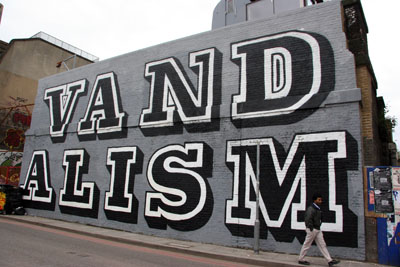
Post modernism is a move away from the failings of the modern. however in graphic design it could be seen that the post modern was more of a continuation or a re evaluation of the modern. Graphic design made a massive serge in the second half of the 90's towards cultural design for example graffiti;
  

The dream that modernism could improve living conditions after WWII never came true, instead lots of quickly and cheaply made housing was made. Living in these conditions it's no wonder that people wanted to object against it, by creating artwork/graffiti all over the exterior of the ugly buildings. Above is an image by EINE in London, his pieces are thought to improve the surroundings in which they are illegally placed.

Much of the post modern feeling was about freedom from the modern, and freedom from the war.
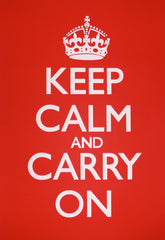
The image below is a replica of the 1939 poster "Keep calm and carry on" which was made during war times by the Ministry of Information to keep spirits high in war time.

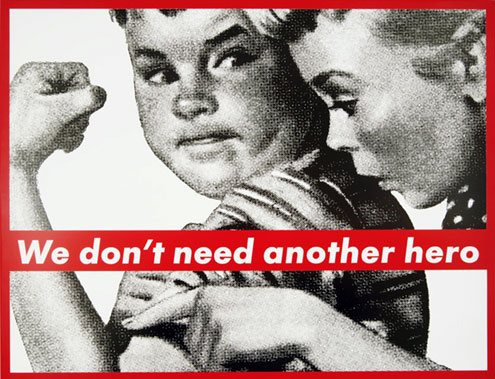
Graphic Design greatly influenced pop art of this time, effecting the work of Roy Lichtenstein, Andy Warhol, and a lady I would like to focus on, Barbara Kruger. Her work is made of collage, mixing media, expressing a freedom which design once didn't have. Her work is also like the images above where they are highly motivation pieces for the rest of the population.


This image above is the original photo taken of Marcel Duchamp's "fountain". This was an incrediably controversial piece for it's time. Duchamp was slightly before his time in creating this "ready made" art. He made people look at common objects in a different light, very much a post modern idea. From looking at this image many critics believe that by placing the urinal this way up he was symbolising other things, for example a Buddha. I'm not sure if I agree but it defiantly has been created with a post modern feel of rejecting all the conventions of the modern.


My last image brings a bit more colour into my look at post modernist graphic design. I said earlier that Andy Warhol was influenced greatly by the post modern graphic era. This image above is made with very bright colours, many people think this is to represent the character of Monroe. However, I believe this is Warhol's way of showing the fake aspect of "the celebrity", deliberately not making his images perfect and making the contrast of the colours almost painfully bright. This image is using many of the conventions of post-modernism by being socially challenging. 


Friday, 18 March 2011

Portfolio Task 3- The Avant Garde

In approximately 300 words discuss the concept of the 'Avant Garde' in relation to two examples of Graphic Design. Include pictures and full references to the works you are discussing.

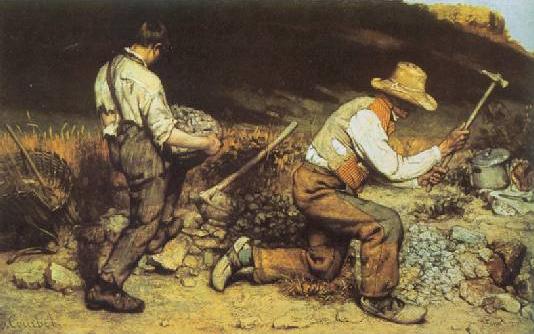
The literal definition of “avant garde” is from the French Advancing Guard, literally paving the way for others to follow. Over the years the weight behind this meaning has slightly changed, as it no longer means making innovative and progressive art but it simply signifies uniqueness.


The painting above (Courbet 1850) was a scandal of it’s time. The image was inspired by the “complete expression of human misery”. This is an example of political avant garde. The Avant Garde was often used in politics as it means to stand out, be different and express opinions. This painting showcases the forgotten people, turning the mundane into art. This would not normally be the subject of high art and is made to lead and challenge conventions.


Another artist that has made art to lead and challenge conventions is Roy Lichtenstein. Alike Courbet he took something that wouldn’t usually be seen as high art, recreated it and showcased it in a place making it worthy of being considered high art. Lichtenstein took images straight out of comics and blew them up to a huge size, and placed them in a gallery. The process of doing this I believe is paving a way for other people to consider the amount of skill and art that goes into comic art. He is making a point and making it well.

Wednesday, 9 February 2011

Othering

These images are my examples of othering. They are print screens of the kerrang website. I believe that the advertising placement on this page is an example of othering. It knows that the kind of people looking at this website (mainly boys, mainly teenage, mainly not bothered about valentines day and its cliches) would not normally bother with valentines day gifts. But by putting this bright red and flowery advertising in their face it makes them feel bad about their thoughts towards valentines. Possibly making them buy into the occasion.